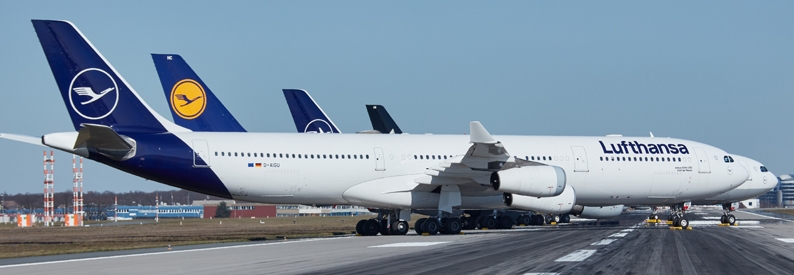
The Court of Justice of the European Union (CJEU) has upheld a ruling by a lower instance court that EUR6 billion euros (USD7 billion) in state aid that the German government granted to Lufthansa Group during the COVID-19 pandemic was illegal.
In an April 23, 2026, ruling in case C-457/23 P, the court agreed with Lufthansa on five out of six grounds of appeal against the May 2023 ruling of the General Court, which found multiple errors in the European Commission's approval of the state aid. However, the judges dismissed the remaining appeal as inadmissible, and highlighted that each of the errors identified on its own was sufficient to invalidate the approval as a whole.
"The judgment under appeal may only be set aside if it were shown that the General Court erred in finding each of those errors. The present appeal may therefore be upheld and the judgment under appeal set aside only if all of the grounds of appeal put forward by the appellant are well founded," the judges ruled.
The appeal that was rejected, allowing the court to uphold the lower instance ruling, centred on the method of calculation of the conversion rate of the EUR1 billion (USD1.2 billion) of Germany's "silent participation" in Lufthansa's shareholding. The General Court contended that the European Commission erred by agreeing to a partial conversion at a fixed price, and partially at the trading price of the shares at the time of conversion, minus 10% or 5.25%, depending on the triggering event.
This, according to the court, violated the COVID-era state-aid temporary framework, which required such conversions to be priced at "5 percent or more below TERP (Theoretical Ex-Rights Price) at the time of the conversion."
The CJEU, which is the EU's highest-instance court, agreed with Lufthansa that the Commission was, in principle, entitled to use different calculations methods. However, these alternative methods should produce "a similar outcome with regard to the incentive effects on the exit of the State and a similar overall impact on the State’s remuneration."
This was not the case, as the General Court established, as the alternative methods provided a different impact than the standard method of calculation would. Lufthansa did not contest the General Court's calculation of the outcome, which rendered its appeal on this point inadmissible.
Lufthansa successfully challenged the General Court on the other five points, which related to whether the carrier was able to find market financing at affordable terms; other terms of the state's participation and exit; the assessment of Lufthansa's market power at certain airports; and, in two aspects, the rules for the divestiture of slots it held as a compensatory mechanism. However, with the "all or none" approach adopted by the court, these were not sufficient to overturn the General Court's ruling.
"We take note of the European Court of Justice’s decision. At the same time, we would like to refer to the European Commission’s investigation, which has been ongoing since 2024 and is intended to lead to a new decision, and which can now take the ECJ’s ruling into account. We will engage constructively in the ongoing process and are in close contact with all relevant institutions," Lufthansa's spokesperson told ch-aviation.
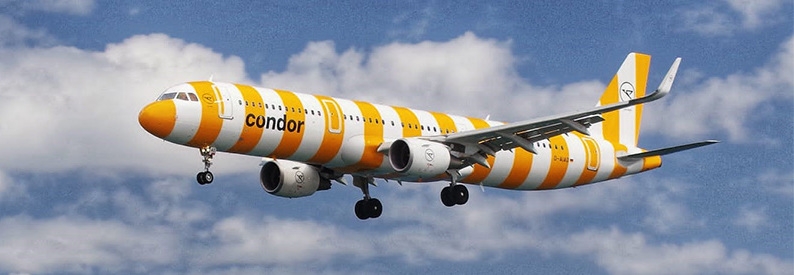
Ryanair Holdings and Condor participated in the case as applicants, largely supporting the General Court's ruling and supporting the invalidation of the approval for Lufthansa's state aid.
"The CJEU judgment again confirms what was obvious from the start: Germany’s EUR6 billion COVID-19 bailout of Lufthansa was illegal state aid that distorted competition. While efficient airlines (like Ryanair and others) were forced to survive through COVID-19 on their own resources, Lufthansa was handed a EUR6 billion benefit by the German government which once again rewarded German inefficiency, damaged competition and hurt consumers. It is time for the European Commission and Germany stop stonewalling and start complying with their EU law obligations and recover the EUR200 million benefits of this illegal state aid directly from Lufthansa without further delay," the Irish LCC said in a statement.
The state aid comprised of EUR306 million (USD358 million) in equity, and EUR5.7 billion (USD6.7 billion) in silent participation split into two mechanisms. Lufthansa also obtained a state-guaranteed EUR3 billion (USD3.5 billion) loan, which was approved as state aid in a different process.
Full Story : Court of Justice of the European Union
- Type
- Base
- Aircraft
- Destinations
- Routes
- Daily Flights