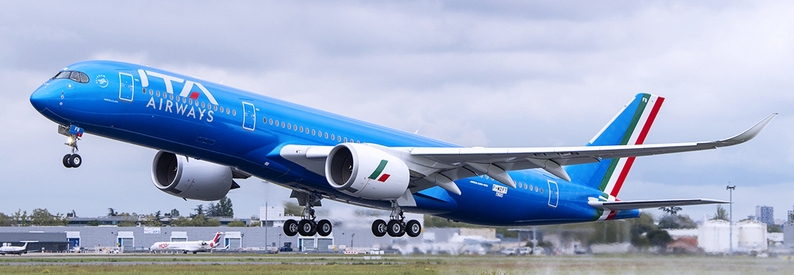
ITA Airways (AZ, Rome Fiumicino) is working on a new, more ambitious fleet plan to fast-track the entry into service of four additional widebodies by 2027, CEO Jörg Eberhart said in an interview with Italian daily La Repubblica.
Responding to union criticisms of ITA's current growth plan to add one long-haul aircraft per year for the next four years, Eberhart said management was finalising a new plan that would see two widebodies added in 2026 and two more in 2027, accelerating long-haul growth and targeting a fleet of 30 long-haul aircraft by 2030. He did not specify the aircraft types to be fast-tracked.
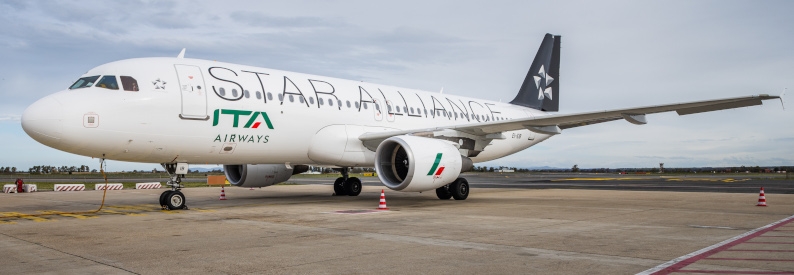
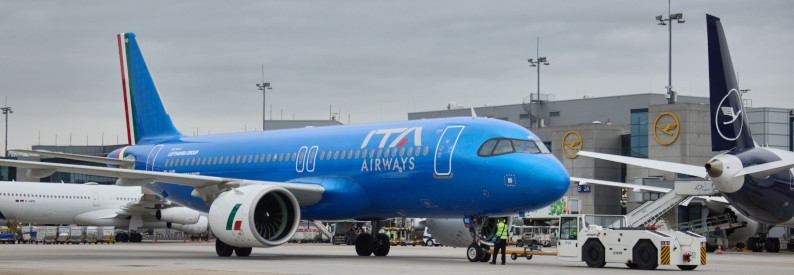
According to ch-aviation fleets data, ITA Airways awaits delivery of three more A330-900Ns and two A350-900s, which would take its widebody fleet to 30 aircraft. It already operates a widebody fleet of 25, namely five A330-200s, fourteen A330-900Ns, and six A350-900s.
Eberhart emphasised that long-haul operations from Rome Fiumicino will remain the backbone of ITA’s strategy. ITA is currently evaluating potential new transatlantic routes, including Rome-New York Newark, subject to regulatory approval of its A++ alliance with United Airlines, Air Canada, and Lufthansa. "We're waiting for a response from the authorities, confident they're working on it. We're confident they'll give us the green light by November 2026," he said.
Quizzed on ITA's appetite for long-haul expansion to Asia, he said: "The war in Ukraine and the Russian blockade of the skies are making Asia more distant: it's a coveted destination, but expensive and complicated. We'll fly more to Latin America and North America."
Eberhart confirmed that the carrier continues to face disruptions from Pratt & Whitney engine inspections, which, he said, had resulted in an average grounding of 18, with 15 still parked in 2026, and with damages estimated at EUR150 million euros (USD176 million).
The airline's narrowbody fleet comprises twelve A220-100s, eighteen A220-300s (with two more ordered), ten A319-100s, seventeen A320-200s, nineteen A320-200Ns (11 more to be delivered), and seven A321-200NX(LR)s (two more to be delivered).
Union pressure
Meanwhile, organisational changes are being reflected in ITA's plans to recruit 500 more people, following union pressure and two strikes in three months.
The flag carrier plans to recruit 100 pilots and 400 flight attendants as part of broader efforts to stabilise labour relations and support steady growth, Eberhart said. "The move demonstrates, first and foremost, that ITA is growing steadily. Of course, we'd be pleased if the unions also appreciated our efforts."
In addition, the airline is increasing part-time options for cabin crew, which, he claimed, have been well received by staff and could improve productivity. "It's a solution that workers like and could also benefit the company."
Asked if the airline was willing to offer pay raises, he said: "A compromise is needed between a company that's not yet making a profit and the legitimate needs of its employees. ITA Airways can contribute, but not in an unlimited way. I hope the unions have a sense of responsibility; granting 20% raises would have an impact on ITA's sustainable growth, on additional new hires, and on natural career progression."
ITA Airways expects to post a positive EBIT for 2025, a milestone Eberhart said would be a point of pride for both management and staff, even as the airline anticipates a net loss of about EUR100 million (USD117 million). He attributed the gap between operating profit and the bottom line to still-heavy leasing and financing costs.
On the commercial side, Eberhart said that ITA plans to retain its current brand while selectively drawing on the heritage of Alitalia, its predecessor. He stressed that the ITA Airways name has established its own value and will not be abandoned, but could be "enriched" by reviving iconic Alitalia design elements from the 1960s, including the tail. The company is evaluating a possible livery redesign, he said.
- Type
- Base
- Aircraft
- Destinations
- Routes
- Daily Flights