The European Union's ReFuelEU Aviation regulation, which aims to cut emissions by increasing the use of sustainable aviation fuel (SAF), is clashing with the operational realities faced by business aviation operators. Multiple stakeholders told ch-aviation that the rules, particularly the anti-tankering ones, are difficult to implement and create a "snowball effect" of disruptions.
“This regulation was designed for airlines and doesn't fit our type of operation,” said Fabien Rousset, director of strategy and transformation at Jetfly Aviation. Holger Korff, chief executive of Excellent Air (Germany), echoed this sentiment in an exclusive interview with ch-aviation in 2025. “It does not suit us. It's a regulation for airlines, not for an executive jet operator.”
According to Bartłomiej Walas, chief executive of Bartolini Air, these constraints can make normal operations unworkable. “Sometimes, it's even impossible to perform a flight without risking a penalty,” he told ch-aviation.
For non-scheduled operators, whose primary selling point is flexibility and speed, the requirement to uplift at least 90% of their fuel requirements at the EU departure airport locally has caused delays and frustration. ch-aviation understands that the European Commission is planning a review to tackle these challenges.
Operational hurdles
Under Regulation (EU) 2023/2405, commonly known as the ReFuelEU Aviation initiative, the SAF mandate was set to begin at 2% in 2025 and rise gradually to 70% by 2050. The regulation also limits tankering, the practice of carrying extra fuel to avoid refuelling at the destination. By requiring operators to uplift at least 90% of their annual fuel needs locally at each European Union airport, the bloc aims to prevent them from bypassing EU rules by taking fuel in third-countries.
The business aviation sector says this mandate creates significant operational headaches.
At busy airports, such as Nice or Madrid Barajas, commercial airlines are prioritised for refuelling, leaving business aircraft waiting for hours. “You are number 10 in the waiting line. Before, we could tanker, but now we risk fines,” Rousset explains.
Martin Prazsky, managing director at Time Air (Czechia), raised similar concerns over refuelling capacity in an interview with ch-aviation. “Private aviation is effectively forced into the 'second row' at refuelling stations. Fuelling companies are overloaded, and airlines are prioritised because of the contracts they have,” he says.
Similar concerns were previously raised by Walas in an exclusive interview with ch-aviation in 2025. “At many airports, we're served at the very end of the queue, after the main airlines, which causes delays and forces suppliers to do extra work for a negligible environmental benefit in the case of light aircraft,” he added.
Safety concerns
These delays ripple through operations. Missed slots can push crews beyond legal duty times, force unplanned overnight stays, and trigger a cascade of rescheduled flights, creating what Rousset called a snowball effect on fleet schedules.
Operators warn that these mandates put crews under significant pressure even beyond delays. Rousset, himself a pilot, notes the “time compression” created by the rules. “When you fly four, five, six sectors in the summer and then have to consider these fuelling constraints, it's a nightmare for crews,” he says.
“It's not only crews, but also ground staff. You're performing a pushback for a delayed flight, you rush it, and you increase the risk of an incident,” he warns.
Efficiency paradox
The regulation aims to reduce emissions by limiting excess fuel weight. But business aviation operators argue the environmental benefit is negligible for smaller jets and turboprops. “For light jets, whether I carry 500 or 800 litres extra makes virtually no difference to fuel consumption,” Walas says.
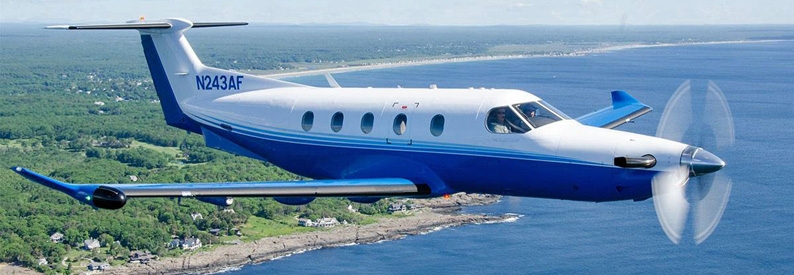
Rousset illustrates this with Jetfly Aviation's fleet of PC-12 turboprops. “Between a full tank and a half tank, the environmental effect is minimal. Previously, measures like reduced ferry-flight speeds were used to cut emissions. Now, to make up for ground delays, pilots fly at maximum speed, outweighing any intended savings.”
Walas further notes an unintended consequence noted in 2025 in comparison to 2024. "Our refuelling operations increased by 78%, meaning that a fuel truck was sent to one of our aircraft 1.78 times more often. Where are the environmental savings?"
Regulator's perspective
Sources close to the European Commission maintain that the regulation is manageable for the sector. The 90% uplift mandate applies only to operators with at least 500 commercial passenger flights departing from EU airports in the previous reporting period.
Exemptions exist for safety reasons, such as maintaining mandatory fuel reserves. Other exemptions, such as for shorter routes, require a three-month notice period, but operators say this is incompatible with the sector's operational characteristics.
Technical aspects of ReFuelEU are under review to simplify requirements, improve transparency, and strengthen SAF traceability, including better integration between the Union Database and European Union Aviation Safety Agency (EASA), ch-aviation learned.
Proposed adjustments
Rousset proposes several pragmatic changes to ease the regulation's operational impact. These include shifting from airport-by-airport reporting to a national or EU-wide level, allowing carriers to meet the 90% threshold as an average across their operations rather than at each airport separately.
He also advocates a weight-based exemption for aircraft under 10 to 20 tonnes, given the negligible environmental benefit of preventing them from carrying extra fuel. Additionally, Rousset suggests extending the “mass balance” flexibility currently granted to fuel suppliers to operators themselves, simplifying the administrative burden.
He argues that the current reporting process is complex, largely manual, and requires paid third-party verification, an obligation that heavily affects smaller operators, forcing them to divert resources from flight operations.
2027 review
The business aviation sector is now pinning hopes on the regulatory revision scheduled for 2027. Rousset emphasises that the sector should have been consulted during the law's drafting. “It would have been better to be included early. Instead, we received the regulation fully formed and are now waiting for review.”
The European Business Aviation Association (EBAA) is also engaging with the European Commission through a working group, seeking adjustments that reflect the sector's operational realities. According to Rousset, larger business aviation carriers are already voluntarily exceeding SAF mandates, but current rules limit their ability to operate efficiently. “We fully back the SAF mandate, but the environmental return does not match the operational and commercial impact of the initiative, nor the administrative burden it imposes on smaller operators,” he stressed.
As the 2027 review approaches, operators hope it will reconcile ReFuelEU's environmental ambitions with the unique characteristics of the sector, avoiding unintended operational and safety consequences while maintaining emissions targets.