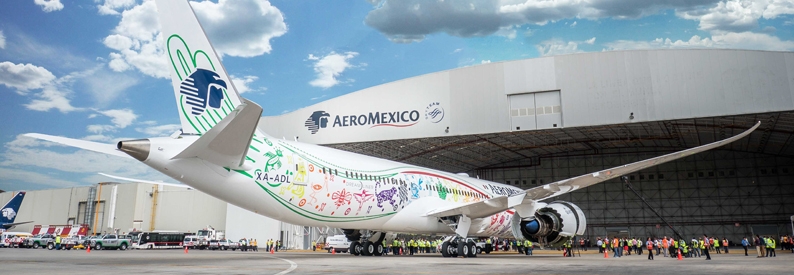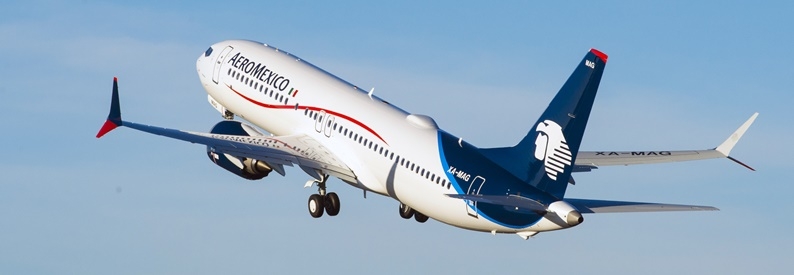
The United States Court of Appeals for the Eleventh Circuit has temporarily halted the Department of Transportation’s (DOT) order to force Delta Air Lines and Aeroméxico to unwind their joint venture agreement by January 1, 2026.
The pause was granted after Delta and Aeroméxico sued the US government in October, stating that the January 2026 deadline would be operationally and financially burdensome as both carriers “are inextricably a single entity in the cross-border market.” The Trump administration had urged the court to reject the request.
In statements to Reuters, Delta said it appreciated “the court’s decision to pause the wind-down of the Delta/Aeroméxico strategic partner while it reviews the validity of the DOT’s order.” Aeroméxico noted that the joint venture will remain in place as the court case proceeds.
Aeroméxico and Delta jointly have a 20.1% share in the US-Mexico market (with 10.6% and 9.5% apiece). Volaris has 20.2%, American Airlines 17.4%, and United Airlines 13.3%, according to data provided by the Mexican government.
Earlier in the year, the DOT found the joint venture to be anticompetitive and terminated the renewal process for the antitrust immunity granted to the partnership. The US regulator had claimed that the Mexican government distorted the transborder market with its actions impacting slots at México City International, and forcing the relocation of all-cargo carriers from this airport to México City Felipe Angeles. The United States Department of Justice backed the DOT's proposal.
Unwinding the Aeroméxico-Delta joint venture was one of several actions the US government took to address this perceived imbalance in the market and Mexico’s disregard for the air transport agreement between both countries. Other actions include placing scheduling restrictions to Mexican carriers operating to the United States, prohibiting the launch of 13 new routes from Mexico City Benito Juárez International and México City Felipe Angeles, and potentially banning the transportation of belly cargo between MEX and the United States.
The Mexican government said officials will travel to Washington in early December for further meetings with their US counterparts. According to the transport ministry, the two sides have established a roadmap and expect to resolve the bilateral aviation concerns by the end of the year. Neither country is considering international arbitration to resolve the ongoing dispute.
Mexico maintains that the actions taken by the previous administration under president Andrés Manuel López Obrador did not impact the market or violate the air transport agreement. The current president, Claudia Sheinbaum Pardo, said the decrees will not be revoked.
Disputing the belly cargo ban
On November 12, Aeroméxico objected to the DOT’s proposal to prohibit Mexican carriers from transporting cargo on combination services, better known as belly cargo, from Benito Juárez International to the United States.
The DOT claimed that the Mexican presidential decrees in 2022 and 2023 violated the US-Mexico Air Transport Agreement and created a “competitive imbalance” between combination and all-cargo carriers. However, “it provides no evidence of such an imbalance, no evidence of harm resulting from it, and no evidence of how the order will remedy it,” said Aeroméxico.
Instead, the ban will harm shippers and consumers and result in market disruptions, and the DOT’s “eye for an eye reasoning” also violates the air transport agreement between both countries, the carrier added, urging the governments to use a dispute resolution mechanism and consultations to address the issue.
Separately, Aerus, a carrier also named in the belly ban proposal, requested the DOT to be removed from it, as it does not deal with the transport of cargo, only the transport of passengers and their baggage on routes from Monterrey Mariano Escobedo to Laredo and Brownsville.
- Type
- Base
- Aircraft
- Destinations
- Routes
- Daily Flights